Tuesday, January 19, 2016
Wetzlar
This beautiful stone building contrasts to the timid
atmosphere of the square in front and conserves its magic charm.
Location:
Wetzlar, Germany
Friday, January 15, 2016
The historical city of Marburg and its spectacular hilltop castle
Travelling along the Valley of Lahn River in Hesse and
enjoying the small and picturesque villages, we cannot miss to visit the
charming, historical town Marburg.
Located just about an hour by train from
Frankfurt Main station, the town fascinates with its historical and religious
heritage and as a seat of the oldest Protestant-founded University in the
world.
Marburg is a quiet university city, revealing tourists its
marvelous historical corners, untouched during centuries.
The long and steep street leads us uphill to the main square,surrounded
by many half-timbered houses and cobblestone narrow paths.
Here right next to
the old market, is located the elegant building of the city hall.
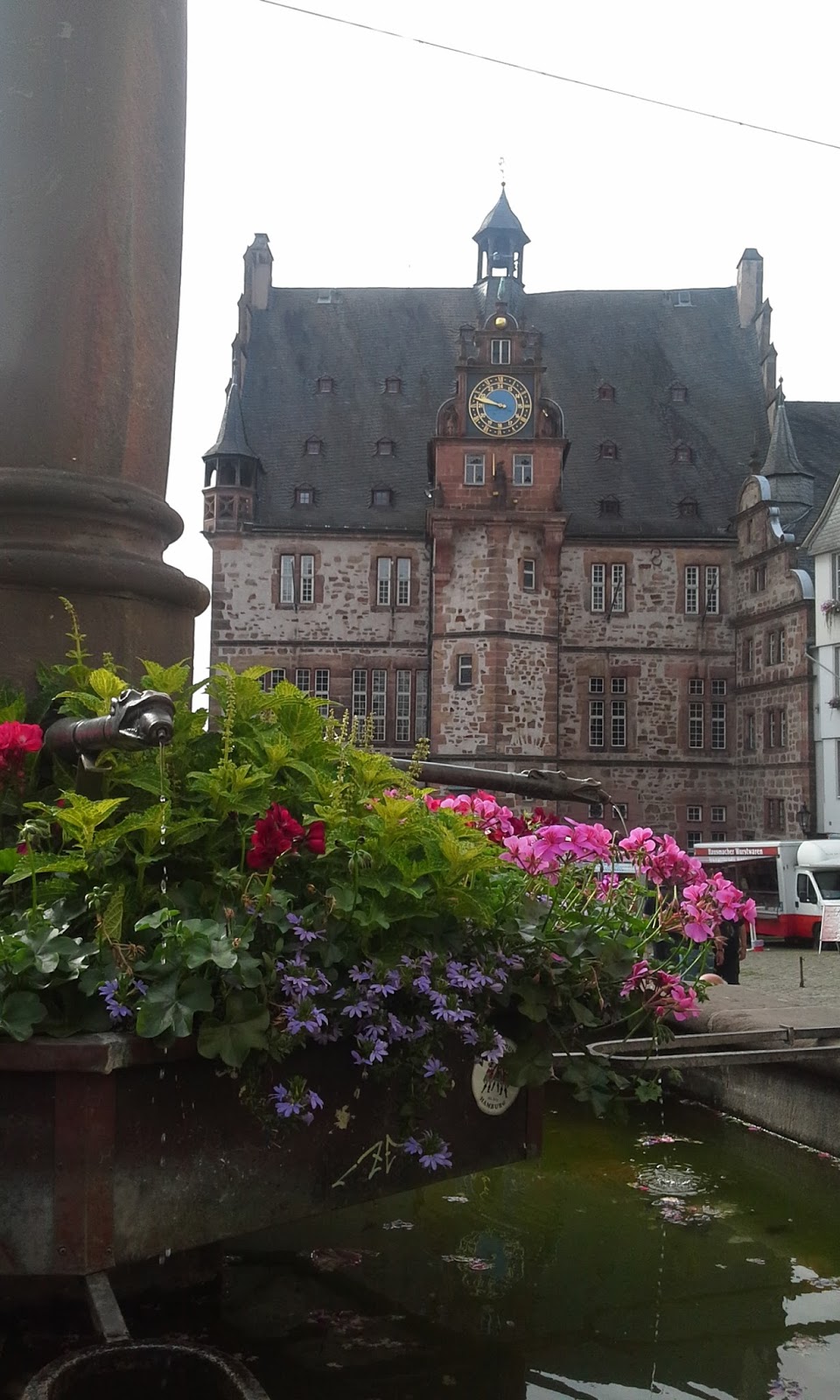
The unique Rathaus with its characteristic elements.
This is one of the
most picturesque buildings in the medieval town of Marburg.
The square is surrounded by small restaurants which create a
unique atmosphere in this Medieval city... and sunshine makes it a perfect
spot!
We stop in this lovely market square for a break half way up
to the castle and enjoy a delicious lunch with a brilliant view towards the
square.
From the square start many narrow, steep, cobblestone
streets, leading to the magnificent Landgrave castle.
Particularly impressive
is the quietness here which contrasts with the busy city center.
The castle is located on the highest point of the city.
The
view from the top is worth the walk up to the castle.
The castle itself is a museum and a great example of unique medieval
architecture.
Going back to the city center we could not miss visiting St.
Elisabeth Church, built to honor St. Elisabeth of Hungary. Elizabeth of Hungary
dedicated her life to the sick and became after her early death one of the most
prominent female saints.
This is the first Gothic church in Germany and one of
the oldest in the country. The architecture of this marvelous church has been
used as a model for the construction of the Cathedral in Cologne.
The church is
amazing with its interior and is a well-known pilgrim destination. Definitely
worth visiting!
The city of Marburg and its castle are unforgettable and a
highlight of a day excursion in Hesse.
The unique Rathaus with its characteristic elements.
The square is surrounded by small restaurants which create a unique atmosphere in this Medieval city... and sunshine makes it a perfect spot!
We stop in this lovely market square for a break half way up
to the castle and enjoy a delicious lunch with a brilliant view towards the
square.
Particularly impressive is the quietness here which contrasts with the busy city center.
The castle itself is a museum and a great example of unique medieval architecture.
This is the first Gothic church in Germany and one of the oldest in the country. The architecture of this marvelous church has been used as a model for the construction of the Cathedral in Cologne.
Location:
Marburg, Germany
Friday, January 8, 2016
The hidden charm of Weilburg
Lahn river is hidden between the mountains Westerwald and Taunus and flows through the old cities of Marburg, Wetzlar, Weilburg and Limburg, which impress with their medieval architecture and rich history.
The calm waters
of the river and picturesque landscapes make every hidden corner easily
accessible place by canoe. The region is a good choice for a holiday camping in
the summer or for a quiet weekend in nature.
Weilburg is an idyllic small town offering impressive combination of stunning nature and rich history. The city can be easily reached by train and is well connected with the other small villages along the Lanh valley.
The road from the station to the old town runs along the river, where on the rocky hill is located the city center and the beautiful and fascinating palace.
The palace, has been used for centuries as the residence of the Nassau Dynasty, includes a church and several buildings, some of them are today a luxury hotel.
The palace complex, with its pompous architecture, ranks among the most important Renaissance buildings in the region of Hesse.
The palace is the main landmark of the city. It is closely located to the idyllic and good preserved city center.
The marvelous garden terraces overlooking into the picturesque Lahn river. The sculptures and the flowers create a unique atmosphere in this garden paradise.
The tranquil place with hundred years old gardens offers many shady places to enjoy beautiful views.
Picturesque views in this peaceful place.
Splendid and
very romantic views.
Extremely impressive are the spacious gardens, terraces are hanging over Lahn.
The breathtaking
gardens offer harmonious combinations of exotic plants and numerous sculptures.
The gardens attract tourists with its tranquility and are preferred picture motifs.
Weilburg is truly impressive, quiet and unforgettable, a wonderful small town which must be visited during vacation in Hesse.
Location:
Weilburg, Germany
Thursday, January 7, 2016
Idyllic day in Rastatt
The small idyllic city of Rastatt is located in the province of Baden-Württemberg and is very famous tourist destination thanks to its variety of historical buildings and the romantic baroque-residence.
The city is very easy to be reached by trains from Baden-Baden or the airport.
During our trip in southern Germany and Black Forest we visited the residence of the margraves of Baden-Baden which is nowadays considered as one of the most elegant and impressive palace in whole Germany.
The brilliant palace is located very close to the city center but far away from the main station.
The vast green areas offer quietness and magnificent views.
Wednesday, January 6, 2016
The unique charm of Kavala
Located at the northern part of Greece, Kavala offers a unique combination of nature and history at the same time.
The city is amphitheatrical built and faces the Bay of Kavala.One of its most amazing and well known landmarks is the citadel, standing on the top of the hill and facing the sea.
The citadel can be reached by the main port but the streets are very steep and narrow. They pass through the old town of Kavala- Panagia. We were very impressed by the old houses with their particular architecture and the small shops. The entire old city is very worth visiting and creates a unique atmosphere, the best choice for spending a great day in Kavala.
The fortress is fascinating with its dimensions and well-preserved walls. Nowadays the fortress offers a small stage where theaters or concerts are regularly performed, especially during summer.
Stunning view towards the city and the aqueduct.
Not to be missed is the circular tower which reveals excellent
panoramic views.
Great panoramic views towards the harbor and the promenade.
Going back to the city we visited the aqueduct, the emblematic
feature of Kavala, very impressive with the small houses built between its arches.
It is close to the sea, well-preserved and easy to reach.
Particularly impressive is the old square with the House of
Mehmet Ali Pasha built in Macedonian architecture style. In the middle of the
square is the statue of Mehmet Ali Pasha, the last Sultan of Egypt.
At the end of this emotional day, we could not miss visiting
Philippi. The ancient city was established by the Macedonia king Phillip and is located just 15 km away from Kavala.
The importance of the town is demonstrated by its
beautiful theater.
During the Roman times imposing Forum, Agora and Baths were
built. Later in early Christian times, St. Paul arrived in the city and
baptized several people, among them St. Lydia- the first European Christian.
This historical fact is commemorated in Kavala.
Kavala is an important cultural and historical city, its
beautiful Mediterranean beaches additionally make this magnificent city a prefered
destination during vacation in Greece.
Friday, January 1, 2016
Monastery of San Lorenzo de El Escorial
El Escorial is a small town located 45 km away from Madrid in the slopes of Sierra de Guadarrama. The town can be reached by buss or trains Cercanias from Atocha.
The grand monastery of San Lorenzo de El Escorial is
undoubtedly one of the most majestic and significant buildings in the history
of Spain. This religious and widely ambitious project of the monarch king
Phillip II is designed and built in Herreran style, also known as Castilian
Baroque.
The monastery complex is a harmonious ensemble designed by
Juan Bautista de Toledo and Juan de Herrera.
And overlooks the mountains around Madrid.
The construction of the complex took two decades (1563-1574)
and was considered by Phillip as an mausoleum and in the tomb, Panteon de los
Reyes, located right below the main altar, are the tombs of all (except of two)
Spanish monarchs.
The monument also commemorates the victory in the battle of Saint Quentin, the feast day of St. Lorenzo.
Following some of the hidden underground passages we access the tomb of the infants. The complex is also impressive by its library,
one of the best in Europe, offering over 50 000 precious books.
The main building of the complex is the Basilica, which has
45 altars and is one of the most impressive we have ever seen.
The main galleries are located around the apartment of
Phillip and the room with the small bed where he died. A small window from here
is overlooking the altar of the Basilica. In such a way the king could attend
all messes without living his room.
Phillip II apartment.
The huge halls and corridors are decorated with paintings from Bosch, Velazquez, Ribera, Tiziano.
El Greco Masterpiece Adoration of the name of Jesus.
The Princes House with its charming garden.
The impressive park surrounds the monastery.
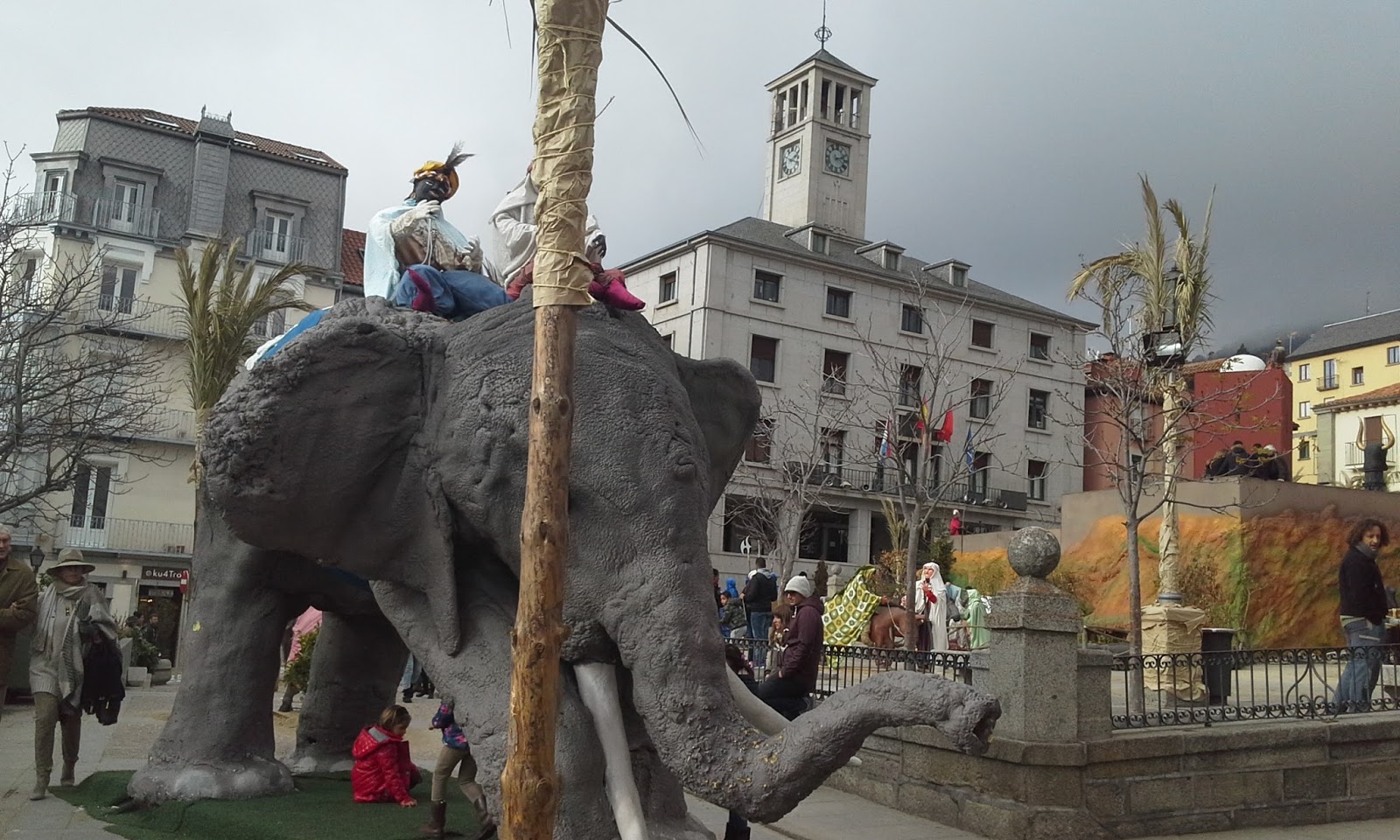
We visited El Escorial around Christmas and were impressed by the figures in the city center representing a typical town during the time Jesus was born.
What a magnificent and breathtaking monastery, what a quiet
and peaceful town, just a gorgeous place to spend an absolutely spectacular
day.
Location:
28280 El Escorial, Madrid, Spain
Wednesday, December 30, 2015
Beyond the Center of Madrid
Madrid offers many attractions beyond the city center and
also provides green escapes serving as a refuge for people seeking quietness and
real contact with nature.
Close to the Royal Palace is Parque del Oeste and at its outskirts
is located the marvelous Egyptian monument Templo de Debod which is over 2200
years old and brought to Madrid as a gift from Egypt.
It is very amazing to
visit it and hear its interesting stories.
The temple is located on the hill and its location towards the sun is the same as its initial location in Egypt.
This is a wonderful place to wander around.
The views from the hill Principe Pio towards the Cathedral
and the Royal Palace.
Behind Templo de Debod is Plaza de Espana. This large square
is a popular tourist destination dominated by the monument of Cervantes and the
bronze sculptures of Don Quixote and Sancho Panza.
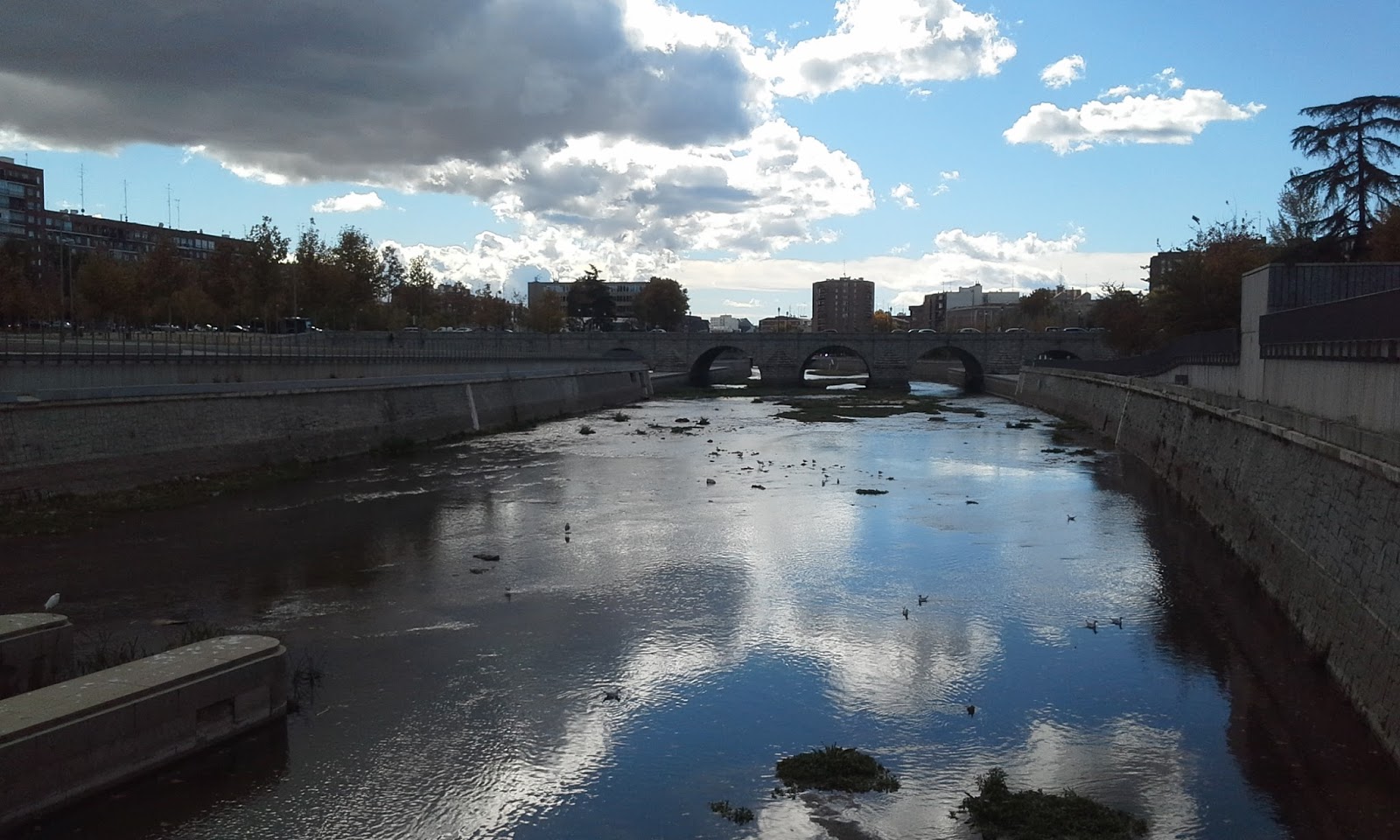
A short walk from here is the quietly flowing River
Manzanares. This part of Madrid is also very picturesque. This is a perfect
place for walking and enjoying marvelous views towards the city.
Parque del Oeste provides the fastest way to reach Casa de Campo.
Once a royal hunting estate, the vast parkland Casa de Campo
is today a home to Attraction Park and a Zoo. There are also many cafes, a
number of outdoor activities.
This extraordinary trip starts from Parque del Oeste and offers fascinating views over Palacio Real, Rio Manzanares, city skyline.
Behind Templo de Debod is Plaza de Espana. This large square is a popular tourist destination dominated by the monument of Cervantes and the bronze sculptures of Don Quixote and Sancho Panza.
Parque del Oeste provides the fastest way to reach Casa de Campo.
Most of the park wild but there are many viewpoints and picnic spots.
Lovely lake offering many attractions.
Panoramic views towards the city.
Location:
Madrid, Madrid, Spain
Subscribe to:
Posts (Atom)